Technical Specifications
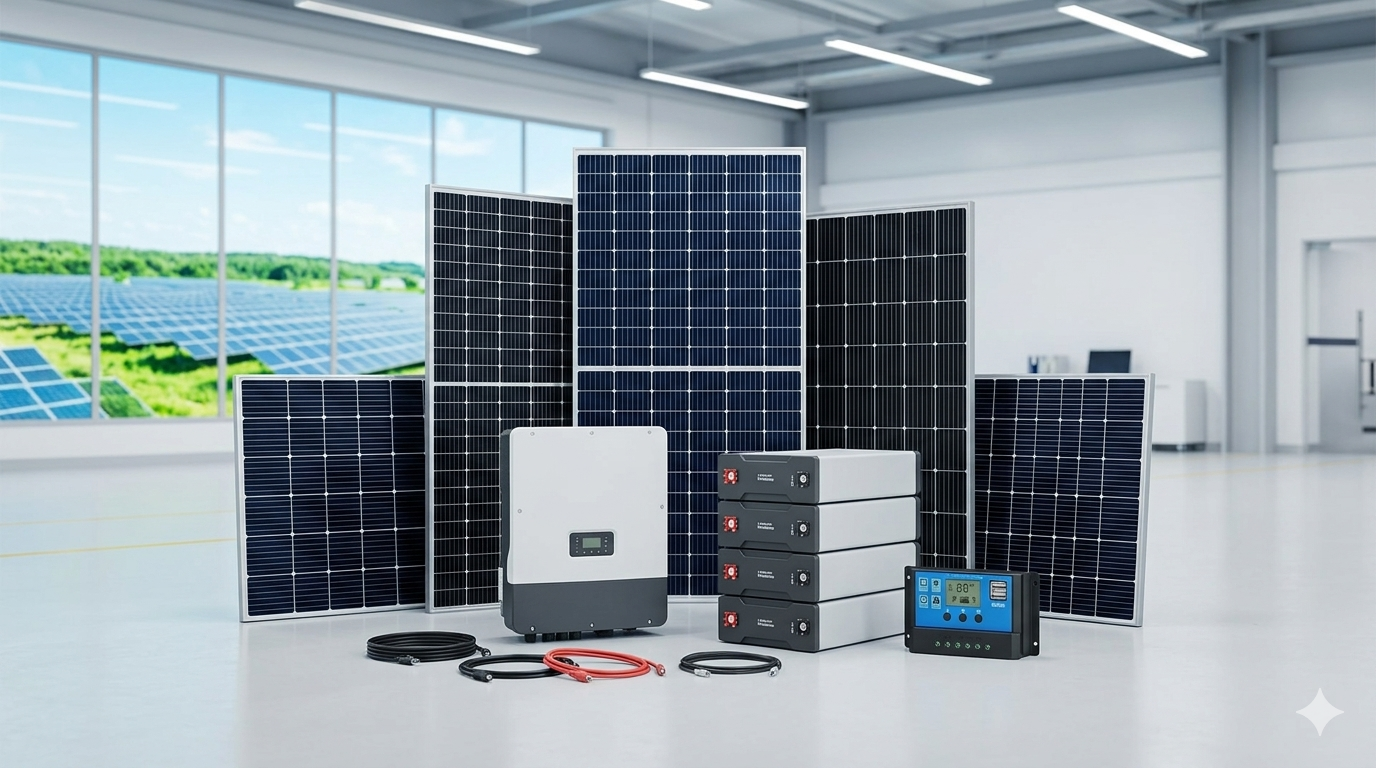
| Brand | Victron Energy |
| Model | SmartSolar MPPT 100/50 |
| Price | $189 |
| Power | 50 W |
| Efficiency | 99% |
| Voltage | 12/24/48V |
| Weight | 1.4 kg |
Victron Energy SmartSolar MPPT 100/50 Technical Review
Device Classification Note
Before proceeding, it is worth clarifying a common specification listing error: the SmartSolar MPPT 100/50 is a charge controller, not an inverter. The “100/50” designation refers to a maximum PV open-circuit voltage of 100V and a maximum charge current of 50A. It does not convert DC to AC. If your application requires AC output, a separate inverter — such as Victron’s own MultiPlus series — would need to be paired with this unit. This review evaluates the device for what it actually is: a mid-range MPPT solar charge controller.
Technical Performance
Core Electrical Specifications
The MPPT 100/50 operates across 12V and 24V battery banks, with automatic voltage detection. Maximum PV input is 100V open-circuit, and the unit handles up to 50A of charge current — translating to a practical maximum array size of roughly 700W on a 12V system or 1,400W on a 24V system.
The MPPT algorithm achieves tracking efficiency above 99% under stable irradiance conditions, with conversion efficiency rated at 98%. Response time to irradiance shifts is approximately 3–5 seconds, which is competitive within this voltage class but slightly slower than premium 150V controllers during dynamic cloud-edge events.
Electrical Specification Compatibility
When pairing PV panels with this controller, four parameters require careful evaluation:
- Voc (Open-Circuit Voltage): Must remain below 100V under coldest expected ambient conditions. Temperature coefficients for Voc are typically negative (around −0.29%/°C for standard crystalline silicon), meaning Voc rises as temperature drops. At −10°C, a nominal 72V string could push above the controller’s hard limit.
- Vmp (Maximum Power Point Voltage): Should ideally sit between 1.25× and 1.5× the nominal battery voltage for optimal MPPT headroom. For a 24V bank, targeting a Vmp of 30–38V per string is advisable.
- Isc (Short-Circuit Current): Must not exceed 50A aggregate across parallel strings. Isc values for individual 60-cell panels typically range from 8–10A, meaning no more than five parallel strings on a 12V system.
- Imp (Maximum Power Point Current): This determines real charging throughput. Confirming that combined Imp of your array does not consistently exceed 50A prevents efficiency losses from current clipping.
- Temperature Coefficient of Power: Panels lose roughly −0.35% to −0.45%/°C of rated output as cell temperature rises. Under mid-summer conditions with cell temperatures reaching 65°C, expect 15–20% derating from STC ratings.
Real-World Off-Grid Use Cases
The MPPT 100/50 is well-suited for mid-sized off-grid cabins, live-aboard sailboats, and overland expedition vehicles with 24V lithium or AGM banks. Its Bluetooth integration via the VictronConnect app provides actionable yield data without requiring a separate monitoring shunt. Integration with the VE.Direct protocol allows seamless connection to Victron’s GX series for full system visibility.
For a 400Ah 24V LiFePO4 battery bank, this controller can realistically deliver a full charge cycle from 20% state-of-charge within 4–5 peak sun hours using a properly sized 800W array.
ROI Analysis
At $189 USD, the cost-per-amp of charge current sits at approximately $3.78/A — reasonable for a unit with robust firmware support and proven field reliability. Compared to generic MPPT controllers at $1.50–$2.00/A, the premium reflects Victron’s software ecosystem and warranty support rather than raw hardware superiority. Payback period in a full off-grid system context is effectively irrelevant in isolation; the controller’s value is realized through reduced battery stress and extended cycle life.
Pros and Cons
Pros:
- Proven MPPT efficiency exceeding 98%
- Comprehensive VictronConnect Bluetooth monitoring
- VE.Direct ecosystem compatibility
- Reliable cold-weather Voc protection logic
Cons:
- 100V input ceiling limits larger 60-cell panel string configurations
- No integrated load output terminals
- Premium pricing versus comparable-spec alternatives
Related Reviews
Looking for more off-grid power solutions? Check out these technical deep-dives: