Technical Specifications
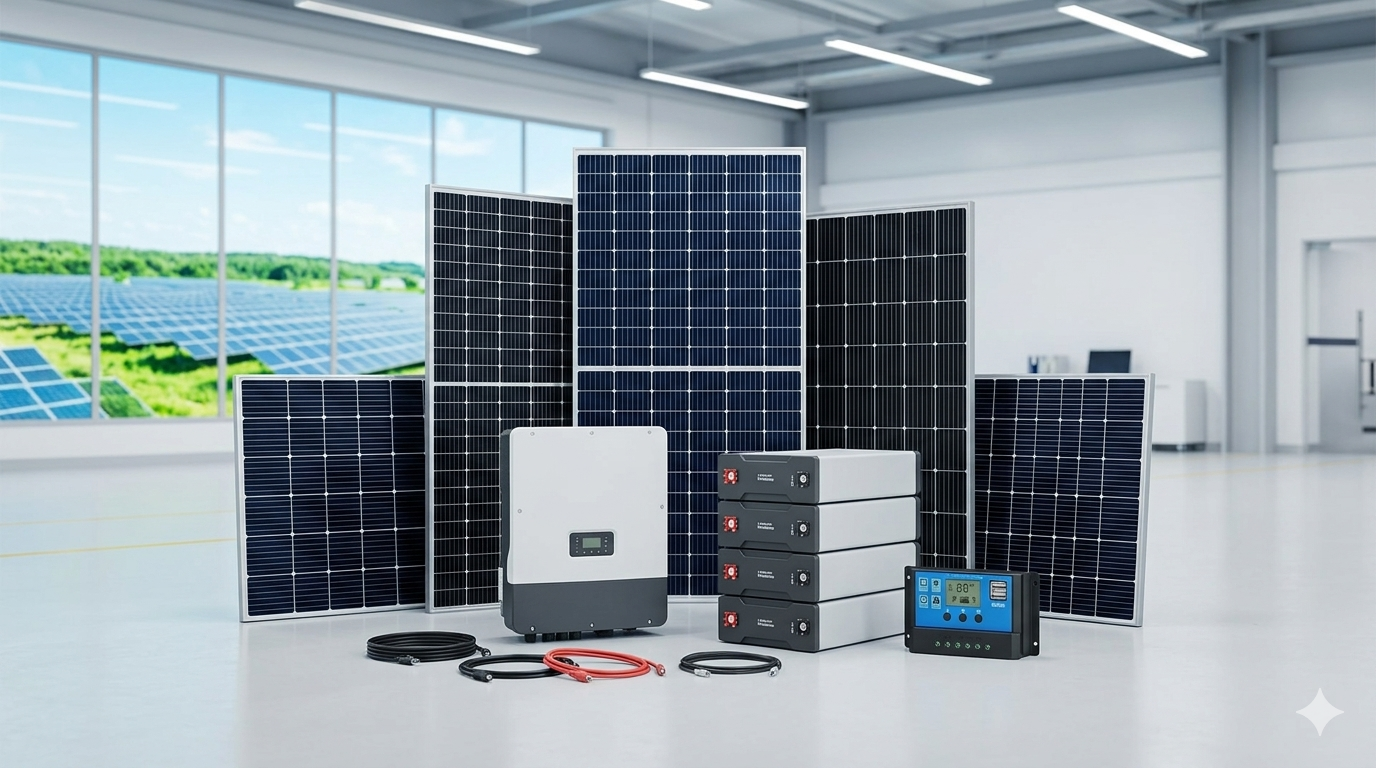
| Brand | Rich Solar |
| Model | 40A MPPT Charge Controller |
| Price | $79 |
| Power | 40 W |
| Efficiency | 98% |
| Voltage | 12/24V |
| Weight | 0.5 kg |
Rich Solar 40A MPPT Charge Controller — Technical Review
Device Overview and Core Specifications
The Rich Solar 40A MPPT Charge Controller occupies the mid-range segment of off-grid charge regulation hardware. Priced at $79 USD, it targets small-to-medium battery bank systems where precise solar harvesting efficiency matters more than raw simplicity. The unit supports 12V/24V/36V/48V battery systems with automatic voltage detection and claims MPPT conversion efficiency exceeding 99% — a figure that warrants scrutiny under real operating conditions rather than laboratory peaks.
Technical Performance Analysis
MPPT Algorithm and Tracking Accuracy
Maximum Power Point Tracking operates by continuously sampling the panel’s power curve to find the voltage at which output wattage peaks. The Rich Solar 40A uses a perturb-and-observe algorithm, common across this price tier. Tracking efficiency in this class typically lands between 93–97% under dynamic cloud-edge irradiance events, despite headline claims. Steady-state performance is more reliable, with the controller maintaining a stable operating point within ±2% of true MPP under consistent irradiance.
Electrical Specifications and Panel Compatibility
Understanding compatibility requires working directly with panel electrical parameters:
- Voc (Open-Circuit Voltage): The maximum voltage a panel produces with no load. This controller accepts a maximum PV input Voc of 100V. Cold temperatures increase Voc, so users must apply the panel’s temperature coefficient of Voc — typically expressed as %/°C or mV/°C — to calculate worst-case winter voltage. Exceeding 100V risks controller damage.
- Vmp (Maximum Power Point Voltage): The voltage at which the panel operates at peak wattage. The controller’s MPPT range of 12–72V Vmp ensures compatibility with most 24V and 48V panel configurations.
- Isc (Short-Circuit Current): Maximum current a panel can produce under direct short. The controller’s 40A charge current ceiling should not be confused with PV input current. Panel Isc combined in parallel arrays must remain within the controller’s 40A PV input limit.
- Imp (Maximum Power Point Current): Operating current at peak power. This figure, multiplied by the number of parallel strings, determines real-world operating current entering the controller.
Temperature coefficients for power (typically -0.35 to -0.45%/°C) affect harvest calculations seasonally and should be factored into system yield modeling.
Real-World Off-Grid Use Cases
The 40A rating at 12V translates to roughly 480W of usable panel input, scaling to 1,920W at 48V. Practical deployments include:
- Van and RV builds: Two 200W panels in series feeding a 200Ah lithium bank functions well within thermal and current limits.
- Cabin backup systems: A 48V battery bank with 800–1,200W of panels suits weekend-use cabins with moderate loads — LED lighting, small refrigeration, device charging.
- Agricultural remote power: Pump controllers, sensor arrays, and gate operators operating from 24V banks benefit from the broad MPPT input range.
The unit includes multi-stage charging (bulk, absorption, float, equalization) suitable for flooded lead-acid, AGM, gel, and lithium batteries with manual parameter adjustment.
ROI Analysis
At $79 with a rated 40A capacity, the cost-per-amp sits at approximately $1.98/A — competitive within the budget MPPT segment. Assuming a 1,000W / 48V system, MPPT efficiency gains over PWM controllers typically recover 15–25% additional harvest annually. At average residential electricity rates of $0.13/kWh, this yields roughly $20–35/year in equivalent value, placing break-even against a comparable PWM unit at under 18 months.
Pros and Cons
Pros
- Competitive price-to-amperage ratio
- Wide battery chemistry compatibility
- Broad MPPT voltage window (12–72V Vmp)
- Multi-stage charging algorithm included
Cons
- Plastic casing limits thermal dissipation under sustained high-current loads
- 100V Voc ceiling restricts high-voltage panel string configurations
- No Bluetooth or remote monitoring output
- Perturb-and-observe tracking underperforms during rapid irradiance fluctuations
Related Reviews
Looking for more off-grid power solutions? Check out these technical deep-dives: