Technical Specifications
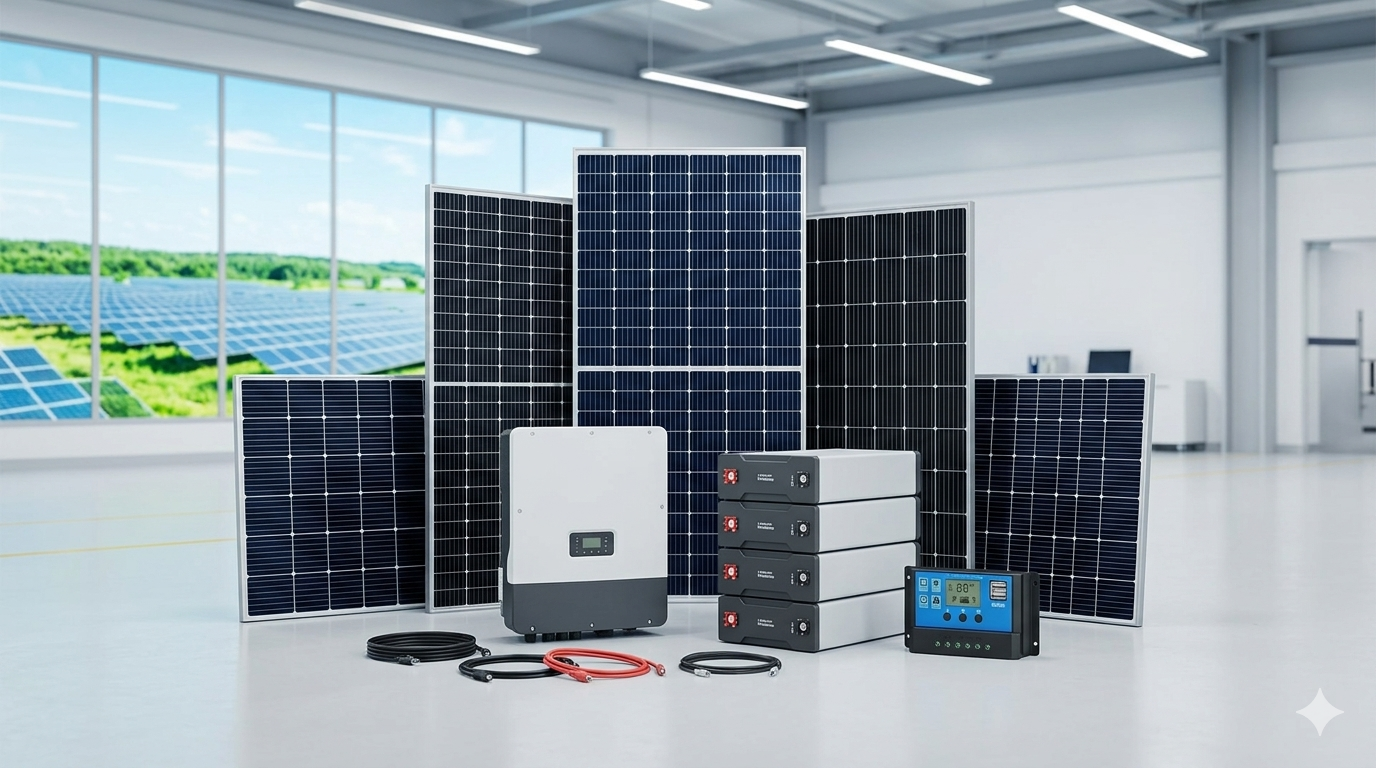
| Brand | Litime |
| Model | 200Ah 12V LiFePO4 |
| Price | $349 |
| Power | 2560 W |
| Efficiency | 95% |
| Voltage | 12V |
| Chemistry | LFP |
| Cycle Life | 4000 cycles |
| Weight | 22.5 kg |
Technical Overview: Litime 200Ah 12V LiFePO4 Battery
The Litime 200Ah 12V LiFePO4 represents a mid-market lithium iron phosphate solution targeting off-grid, RV, and marine applications. At a nominal voltage of 12.8V and a capacity of 200Ah, the usable energy storage sits at approximately 2,560Wh — assuming the standard 100% depth of discharge that LiFePO4 chemistry permits. At $349, the price-per-watt-hour lands at roughly $0.136/Wh, a competitive figure in the current residential storage segment.
Cell Chemistry and Cycle Life
LiFePO4 chemistry delivers meaningful advantages over AGM and standard lithium-ion alternatives. The iron-phosphate bond is thermally stable, significantly reducing thermal runaway risk under overcharge or physical stress conditions. Litime rates this unit for approximately 4,000 charge cycles at 80% depth of discharge before capacity degrades to 80% of nameplate — a figure that translates to roughly 10+ years under typical daily cycling conditions.
Self-discharge rate is low, typically under 3% per month, which makes this battery viable for seasonal storage without the maintenance burden associated with lead-acid chemistries.
Built-In BMS Performance
The integrated Battery Management System handles cell balancing, over-current protection, short-circuit cutoff, and temperature-based charge/discharge restrictions. The BMS supports a continuous discharge current of 100A, with a peak tolerance designed for high-draw applications like inverter surge loads. Low-temperature charge protection activates below approximately 0°C, preventing lithium plating — a critical safeguard often absent in budget-tier units.
Real-World Off-Grid Use Cases
RV and Van Builds
In a 12V RV system, a 200Ah LiFePO4 provides meaningful daily autonomy. Running a 12V compressor refrigerator (~45Wh/hour), LED lighting (~10Wh/hour), and a phone/laptop charging setup (~30Wh total daily), a user can realistically draw 400–500Wh per day, giving three to four days of independence without solar input. Paired with 400W of rooftop solar and a quality MPPT charge controller, this battery reaches near-full recharge within four to six peak sun hours.
Marine and Trolling Motor Applications
The weight advantage is significant here — the Litime 200Ah weighs approximately 48 lbs, compared to 60–65 lbs for an equivalent AGM. In marine environments, the BMS protection against humidity-related short circuits and the sealed form factor add practical durability.
Home Solar Backup
For small-scale backup systems, this battery covers essential loads — routers, LED circuits, phone charging, and fans — through a typical overnight window without issue. It is not designed for whole-home backup but performs reliably in load-shedding or grid-outage scenarios covering 800–1,200Wh of critical consumption.
ROI Analysis
At $349, the lifetime cost calculation is instructive. Assuming 4,000 usable cycles at 2,560Wh per cycle, the battery delivers approximately 10,240,000Wh or 10,240kWh of total throughput over its service life. That equates to a storage cost of roughly $0.034 per kWh — substantially lower than grid electricity rates in most U.S. markets and significantly cheaper than equivalent AGM cycling costs when factoring replacement frequency.
A comparable 200Ah AGM battery costs $150–$200 but delivers only 500–800 usable cycles at 50% DoD, requiring two to three replacements over the same period. Total AGM expenditure reaches $450–$600, making the Litime a net-positive investment within the first replacement cycle.
Pros and Cons
Pros
- Competitive cost-per-watt-hour at $0.136/Wh
- Full 100% DoD usability without capacity penalty
- Integrated BMS with low-temperature charge protection
- Lightweight relative to AGM equivalents
- 4,000+ cycle rating supports decade-long deployment
Cons
- No Bluetooth monitoring in base configuration
- BMS continuous discharge ceiling (100A) limits large inverter pairing without parallel configuration
- Low-temperature charge cutoff requires supplemental heating in sub-freezing environments
- Single unit capacity insufficient for whole-home backup without bank expansion
Related Reviews
Looking for more off-grid power solutions? Check out these technical deep-dives: