Technical Specifications
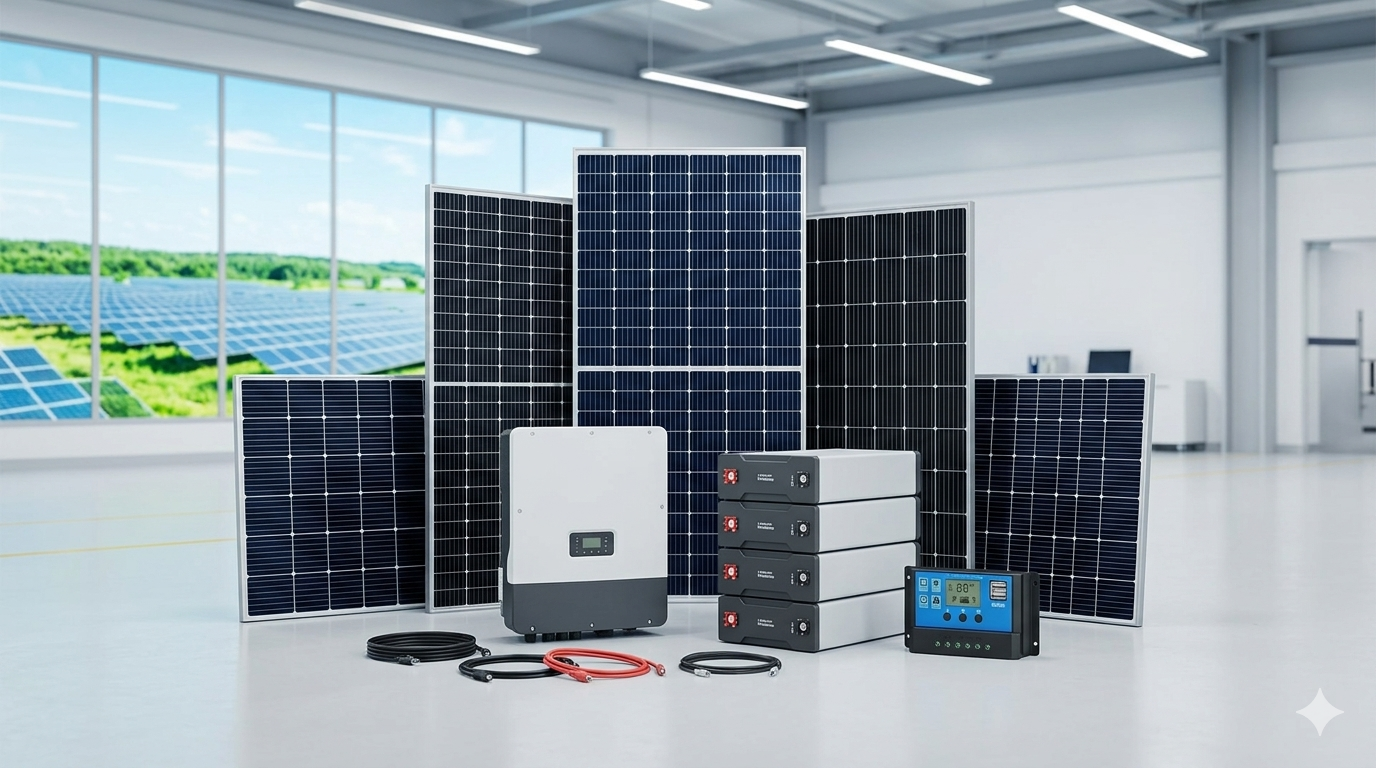
| Brand | Chins |
| Model | 100Ah 24V LiFePO4 |
| Price | $299 |
| Power | 2560 W |
| Efficiency | 95% |
| Voltage | 24V |
| Chemistry | LFP |
| Cycle Life | 3000 cycles |
| Weight | 13.6 kg |
Chins 100Ah 24V LiFePO4 Battery: Technical Review
Core Electrical Specifications
The Chins 100Ah 24V LiFePO4 delivers a nominal capacity of 2560Wh at a nominal voltage of 25.6V, with a usable discharge capacity rated to 100Ah across its 24V architecture. The battery operates within a charge voltage ceiling of approximately 29.2V and a discharge cutoff near 20V, parameters consistent with standard LiFePO4 chemistry tolerances. Peak continuous discharge current is typically rated at 100A, with cold cranking and surge performance determined by the integrated Battery Management System (BMS).
The built-in BMS handles cell balancing, over-charge protection, over-discharge protection, short-circuit cutoff, and thermal management. This is not an optional feature here — it is the primary safeguard for chemistry stability and cycle longevity. Without independent BMS data sheets published by Chins, third-party discharge curve testing becomes the most reliable source for evaluating actual capacity under varying C-rates.
Technical Performance Analysis
LiFePO4 chemistry provides a relatively flat discharge curve between approximately 25.6V and 24V, meaning usable voltage remains stable across the majority of the discharge cycle. This characteristic benefits inverters and charge controllers that require consistent input voltage to maintain efficiency.
At a 0.2C discharge rate (20A), the Chins unit should deliver close to its rated 100Ah. At higher discharge rates such as 1C (100A), expect measurable capacity reduction — a standard behavior across all LiFePO4 cells, though Chins does not publicly publish explicit C-rate derating curves. Cycle life for LiFePO4 chemistry at 80% Depth of Discharge (DoD) is commonly rated between 2000 and 3000 cycles. Chins claims up to 4000 cycles under optimal conditions, though independent long-term verification remains limited at this price point.
Self-discharge rate is low — typically under 3% per month — making the Chins unit suitable for seasonal or standby applications without constant maintenance charging.
Real-World Off-Grid Use Cases
At 2560Wh usable (assuming 100% DoD, though 80% DoD is operationally recommended, yielding ~2048Wh), this battery supports several practical configurations:
- Van or RV electrical systems: Running a 12V compressor refrigerator (~45W), LED lighting (~20W), and device charging (~30W) totals roughly 95W continuous. A single Chins 100Ah 24V unit provides approximately 21 hours of runtime under this load profile at 80% DoD.
- Small cabin backup: Pairing with a 400–600W solar array and a 24V MPPT charge controller creates a functional daily cycling system capable of handling basic loads through multi-day low-irradiance periods.
- Marine applications: The sealed, non-spillable chemistry supports marine use, though users should confirm enclosure IP ratings independently.
The 24V architecture reduces current demands compared to 12V equivalents, allowing thinner wiring gauges and reduced resistive losses — a practical advantage in mobile installations.
ROI Analysis
At $299, the per-watt-hour cost is approximately $0.117/Wh. Compared to sealed lead-acid alternatives at similar capacity, the LiFePO4 premium is justified across a multi-year horizon. A comparable 24V 100Ah AGM battery may cost $150–$200 but delivers roughly 50% usable capacity and 300–500 cycles before significant degradation. Over 2000 cycles, the Chins unit’s cost-per-cycle-watt-hour is substantially lower, assuming cycle life claims hold under real operating conditions.
Pros and Cons
Pros
- Competitive price-per-Wh for LiFePO4 chemistry
- Integrated BMS reduces external component requirements
- Flat discharge curve benefits inverter efficiency
- Low self-discharge supports standby deployment
Cons
- No publicly available independent BMS specification sheets
- Cycle life claims unverified by third-party long-term testing
- Limited cold-temperature performance data published
- Single unit may be undersized for whole-home backup without series/parallel expansion
Related Reviews
Looking for more off-grid power solutions? Check out these technical deep-dives: