Technical Specifications
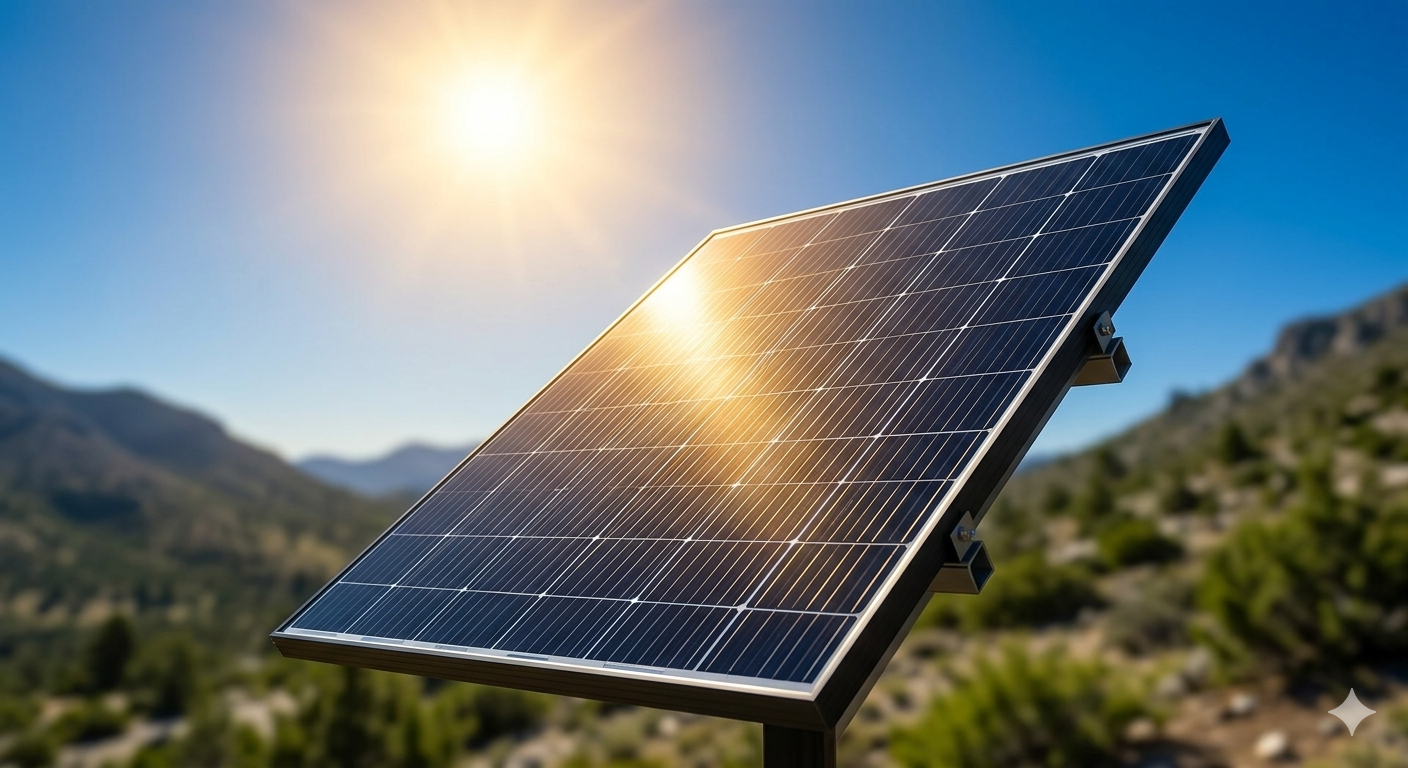
| Brand | Jackery |
| Model | SolarSaga 80W |
| Price | $199 |
| Peak Power | 80 W |
| Efficiency | 24% |
| Cell Type | Monocrystalline |
| Voc (Open-Circuit) | 24.2 V |
| Vmp (Operating) | 19.8 V |
| Isc (Short-Circuit) | 4.02 A |
| Imp (Operating) | 3.82 A |
| Temp. Coeff. Pmax | -0.35%/°C |
| Max System Voltage | 600 V |
| Dimensions | 535x535x4mm |
| Weight | 3.4 kg |
Jackery SolarSaga 80W: Technical Review
Overview and Market Position
The Jackery SolarSaga 80W sits at a mid-range price point of $199 USD within the portable solar panel segment. At roughly $2.49 per watt, it occupies a premium tier compared to generic alternatives, reflecting Jackery’s brand recognition and ecosystem compatibility. This review examines whether the electrical specifications, build quality, and real-world performance justify that premium for off-grid users making purchasing decisions based on data rather than marketing.
Electrical Specifications Analysis
Core Parameters
Understanding the SolarSaga 80W requires a close reading of its electrical profile. The Voc (Open-Circuit Voltage) of 24.2V establishes the panel’s maximum voltage under no-load conditions—relevant for confirming compatibility with charge controllers that have defined input ceilings. The Vmp (Optimum Operating Voltage) of 19.8V represents the voltage at which the panel delivers peak power in standard test conditions, pairing with a Imp (Optimum Operating Current) of 3.82A to produce the rated 80W output.
The Isc (Short-Circuit Current) of 4.02A is notably close to the Imp value—a spread of only 0.20A—indicating a reasonably flat I-V curve profile in this operational region. This characteristic suggests the panel can sustain output close to its peak across a reasonable range of load conditions.
The maximum system voltage of 600.0V is high relative to what most portable users will encounter, providing headroom for series configurations with compatible Jackery power stations that support higher input voltages.
Temperature Performance
The temperature coefficient of Pmax at -0.35%/°C is a critical metric for real-world efficiency. For every degree Celsius above the 25°C STC baseline, output degrades by 0.35%. In a practical scenario—say, panel surface temperature reaching 55°C on a summer day—output drops approximately 10.5%. This figure is competitive but not exceptional among monocrystalline panels, where values between -0.30% and -0.45% are typical. Users in arid, high-temperature climates should factor this degradation into daily energy budget calculations.
Real-World Off-Grid Use Cases
Portable Power Station Pairing
The SolarSaga 80W is designed for use with Jackery’s Explorer series, and the 19.8V Vmp aligns well with the MPPT charge controllers found in those units. Two panels wired in series would produce approximately 39.6V at Vmp—within the acceptable input range of higher-capacity Explorers. A single panel delivering a realistic 60–65W in non-ideal conditions can recharge an Explorer 240 (266Wh) in approximately four to five hours of usable sunlight.
Vehicle-Based and Hiking Applications
The foldable design makes this panel practical for van life setups, base camping, or emergency preparedness kits. At 80W, it can sustain low-power continuous loads: phone charging, LED lighting, or a 12V fan. It is not sufficient as a standalone source for continuous appliance use (refrigeration, cooking), but functions well as a supplemental charging source in multi-panel arrays.
ROI Analysis
At $199 for 80W, the cost-per-watt is higher than fixed rooftop installations but reasonable for portable equipment. Assuming 250 charge cycles per year into a power station, the panel effectively offsets grid energy costs incrementally. Payback in pure energy cost terms is long—likely five to seven years depending on local electricity rates—but the value proposition for off-grid independence and emergency preparedness extends beyond direct energy economics.
Pros and Cons
Pros
- Competitive temperature coefficient for a portable monocrystalline panel
- 600V max system voltage enables flexible series configurations
- Strong ecosystem compatibility with Jackery power stations
- Isc-to-Imp ratio indicates stable output near peak operating point
Cons
- $2.49/W is expensive relative to rigid panel alternatives
- 80W capacity limits solo use to low-draw applications only
- No IP rating published for the solar cells themselves
Final Assessment
The SolarSaga 80W is a technically competent portable panel with specifications that hold up under scrutiny. The -0.35%/°C temperature coefficient and clean electrical parameters make it a reliable choice for Jackery ecosystem users. The price premium is defensible primarily for portability and brand integration rather than raw electrical performance.
Related Reviews
Looking for more off-grid power solutions? Check out these technical deep-dives: